1. Introduction
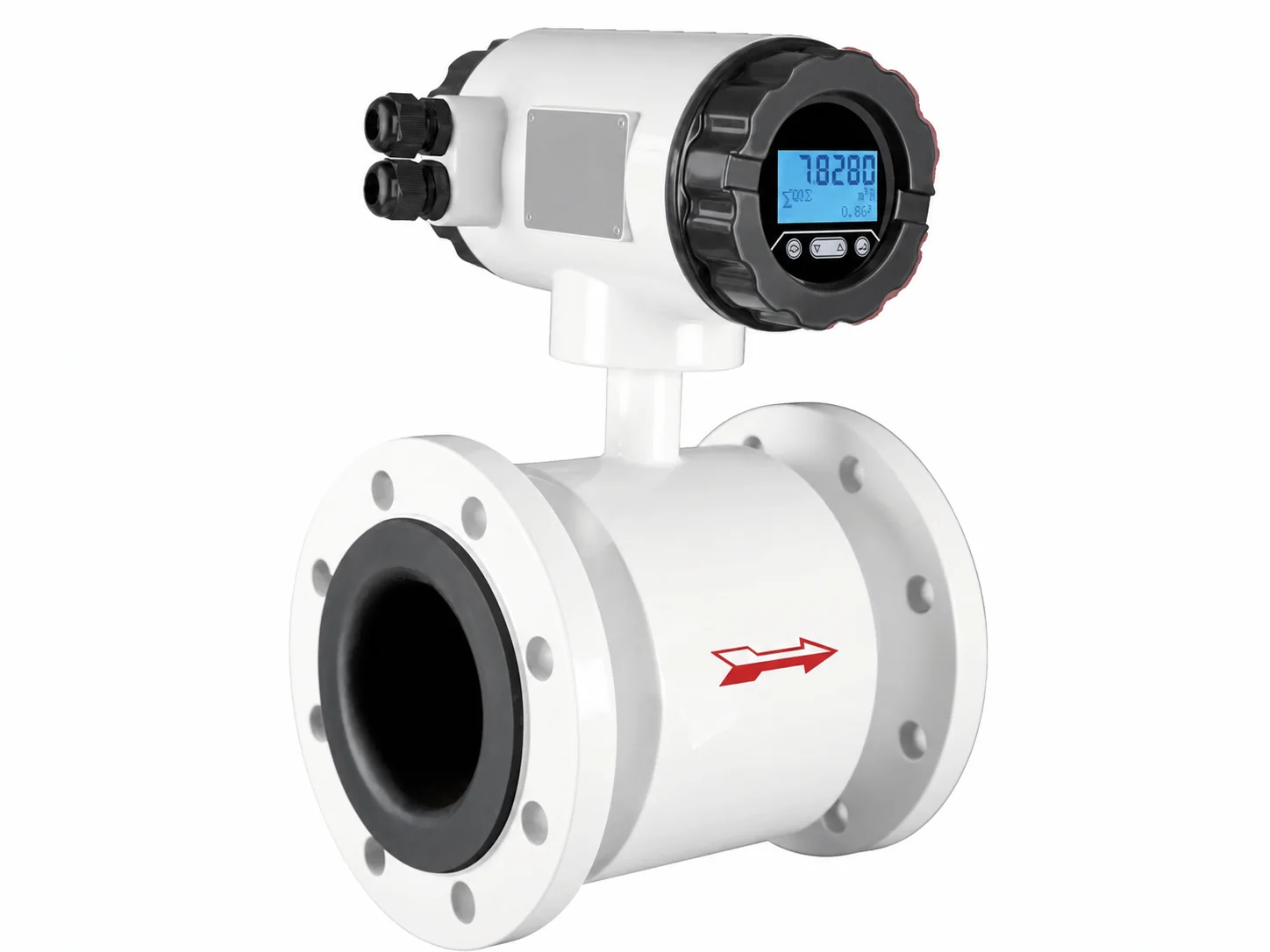
In wastewater treatment plants, flow measurement is the basis for process control and cost accounting. Electromagnetic flowmeters are widely used in inlet, outlet, and dosing sections due to their no pressure loss, ability to measure liquids with solids, and high accuracy. However, the complex composition of wastewater can cause electrode corrosion, lining wear, or signal interference if selection is improper. This article summarizes key selection points based on GB/T 18659-2023 and industry practices.
2. Electrode Material Selection
Electrodes directly contact the liquid, so corrosion resistance is critical:
- Stainless steel 316L: Suitable for pH 6-8, low chloride wastewater, low cost but not resistant to strong acids/bases.
- Hastelloy C-276: Resistant to chlorides, sulfuric acid, phosphoric acid, etc., suitable for chemical wastewater or dosing points (e.g., sodium hypochlorite).
- Tantalum: Extremely corrosion-resistant to almost all acids (except HF), but expensive, used in highly corrosive conditions.
- Platinum-iridium alloy: Suitable for trace corrosive components, e.g., discharge monitoring.
Selection principle: Determine based on pH, chloride concentration, presence of oxidizers, etc., referring to corrosion data in GB/T 20801.3-2020.
3. Lining Material Selection
The lining protects the coil and isolates the medium:
- Polyurethane: Good wear resistance, suitable for inlet water with sand, sludge lines, but temperature ≤80°C, not resistant to strong acids/bases.
- PTFE: Strong corrosion resistance, pH 1-12, temperature ≤180°C, but poor wear resistance, suitable for dosing or chemical wastewater.
- Neoprene: Resistant to weak acids/bases, moderate wear resistance, suitable for general wastewater, low cost.
4. Grounding and Installation Requirements
Electromagnetic flowmeters rely on liquid potential grounding; incorrect grounding causes errors:
- Grounding ring: Required when pipe is lined or non-metallic (material same as or better than electrode).
- Installation position: Avoid bubble accumulation (e.g., straight pipe ≥5D after pump, ≥3D after elbow); for aeration tank outlets with bubbles, consider dual-frequency excitation or an air release valve.
- Signal cable: Use dedicated shielded cable, separate conduit, away from strong interference sources like VFDs.
5. Range and Accuracy
Flow velocity in wastewater is usually 1-3 m/s, turndown ratio ≥20:1. Accuracy: 0.5% for custody transfer, 1.0% for process control. Note: for low velocity (
6. Practical Case
In a municipal WWTP, inlet water with sand used polyurethane lining + Hastelloy electrodes, running well after 2 years. Another dosing point with PTFE lining + 316L electrodes leaked due to sodium hypochlorite corrosion; replaced with tantalum electrodes, then normal.
7. Conclusion
Selection should consider medium properties, temperature, pressure, and installation conditions, referencing GB/T 18659-2023 and manufacturer manuals. Install grounding rings, surge protectors at key points, and calibrate annually. SIENCUN (Xiechuang Instrument) provides customized solutions based on actual conditions.